
Illness-causing bacteria and viruses are among some of the oldest organisms on earth – many can be traced back millions and even billions of years. While most are responsible for mild sicknesses like the common cold, some can cause much more devastation.
In severe cases, these infectious agents can lead to deadly global outbreaks. Below, we explore some of the world’s deadliest outbreaks and pandemics in history, from the oldest recorded to the most recent.
1. Plague of Justinian (541 to 542 AD)
Estimated Deaths: 25 to 50 million
The Plague of Justinian is the oldest recorded pandemic in history, affecting nearly 13% to 26% of the world’s population. The outbreak started in the Eastern Roman Empire and hit its capital, Constantinople, the hardest. Eventually, it spread to the Mediterranean.

Evidence suggests that the outbreak was caused by the Yersinia pestis bacteria, which was also the culprit for the well-known Black Plague. The outbreak was likely spread by the infected rodent population. Fleas would bite rats that had the infection and become infected themselves.
The infected fleas would then bite humans, transmitting the bacteria to them. While less common, people were able to spread the illness to each other through close contact and respiratory droplets.
Symptoms of the plague included:
- Swollen and painful lymph nodes
- Fever and chills
- Headaches and muscle aches
- Fatigue and abdominal pain
- Bleeding into the skin and organs, leading to gangrene
- Cough, chest pain, and difficulty breathing
Unfortunately, no cure was known at the time. Given limited medical understanding and experience, most treatments were ineffective at combating the outbreak.
The outbreak eventually ran its course as the bacteria became less virulent and infectious, the number of human hosts declined, immunity increased, and climate change affected the rodent population that harbored the disease.
2. Second Plague Pandemic (Black Death) (1346 to 1353)
Estimated Deaths: 75 to 200 million
Although the Black Death started from the same bacteria as the Justinian Plague, the devastation was far worse – it is known as one of the worst outbreaks in history. It started in Asia and quickly spread to Europe, affecting 30% to 60% of its population.
Like its predecessor, the Black Plague started and spread through infected rodents and fleas. It also had many of the same symptoms, including swollen and painful lymph nodes (buboes) that would often burst.
Again, there was no known cure, and medical knowledge was still very rudimentary at the time. Treatments included bloodletting, herbal remedies, and boil-lancing, but they were largely ineffective.
Eventually, the Black Plague ended once quarantine measures were put in place, immunity levels increased, available hosts decreased, and climate change reduced rodent populations.
3. First Cholera Pandemic (1817 to 1824)
Estimated Deaths: hundreds of thousands
The First Cholera Pandemic began in India as a result of the Vibrio cholera bacteria that was transmitted through contaminated water and food. It soon spread to Southeast Asia, the Middle East, East Africa, and the Mediterranean via trade routes. Poor sanitation and a lack of clean drinking water contributed to the quick spread of cholera.
Symptoms of the outbreak included:
- Diarrhea
- Dehydration
- Vomiting
- Muscle cramps and shock
Like many of the previous outbreaks, there was no known cure. Over time, the first cholera outbreak subsided due to improved sanitation, increased immunity, and seasonal changes.
Comparably, the First Cholera pandemic did not cause as much global devastation as the other outbreaks on this list. However, it was the beginning of over 40 years of the global cholera cycle.
4. Second Cholera Pandemic (1829 to 1851)
Estimated Deaths: over one million
As the name suggests, The Second Cholera Pandemic was caused by the same bacteria as the first outbreak roughly five years earlier. Many of the causes and symptoms were also identical. However, the second pandemic spread much more widely, affecting far more people worldwide.
The Second Cholera outbreak also started in India; however, it quickly spread to Asia, Europe, and North America. During the second pandemic, Russia, the United Kingdom, Eastern Europe, and the United States were also affected.
As with the first pandemic, there was no known cure, and many of the treatments remained the same, including bloodletting and herbal remedies. However, the second time around, the efforts to improve sanitation greatly improved thanks to the research of pioneering English physician John Snow.
He found a connection between contaminated water and the transmission of cholera, which led to better public health and sanitation practices that eventually subdued the spread.
5. Third Cholera Pandemic (1852 to 1860)
Estimated Deaths: roughly one million
Although Snow’s research greatly improved public sanitation efforts, there was still no known cure for cholera, leading to another outbreak. The origin, cause, and symptoms remained the same as the first two pandemics. However, during the third outbreak, cholera spread to Africa and disproportionately affected Europe and North America.
Although a cure was not found, Snow continued his research and ultimately found that the bacteria was waterborne. As a result, there was greater emphasis on public sanitation, with many cities investing in better sewage systems and cleaner water supplies.
Treatments also improved during the third outbreak, with a larger focus on rehydration efforts through intravenous and oral methods.
6. 1889 Flu Pandemic (1889 to 1890)
Estimated Deaths: around one million
The 19th-century flu pandemic began in the Russian Empire or modern-day Uzbekistan and quickly spread to Europe, North America, Africa, and Asia. The specific flu strain is unknown, but influenza A virus subtype H3N8 is suspected to be the culprit.
This viral infection spread from infected individuals when they would cough or sneeze. Common symptoms included:
- Fever and headaches
- Cough and nasal congestion
- Fatigue and body aches
Like many of the outbreaks on this list, there was no specific cure or antiviral treatment at the time. However, treatment was more supportive, focusing on helping reduce symptoms through bed rest, fluids, herbal treatments, and aspirin.
Eventually, the flu pandemic began to subside as more people developed immunity and improved their hygiene.
7. 2009 Flu Pandemic (2009 to 2010)
Estimated Deaths: 150,000 to 575,000
Although we have jumped ahead nearly a century, that doesn’t mean several outbreaks didn’t occur during this period. Between the last flu pandemic and the current one, there were several other flu cases caused by various viral strains. Also, an outbreak of the famous ebola virus occurred almost at the same time. However, the impact was on a much smaller scale.
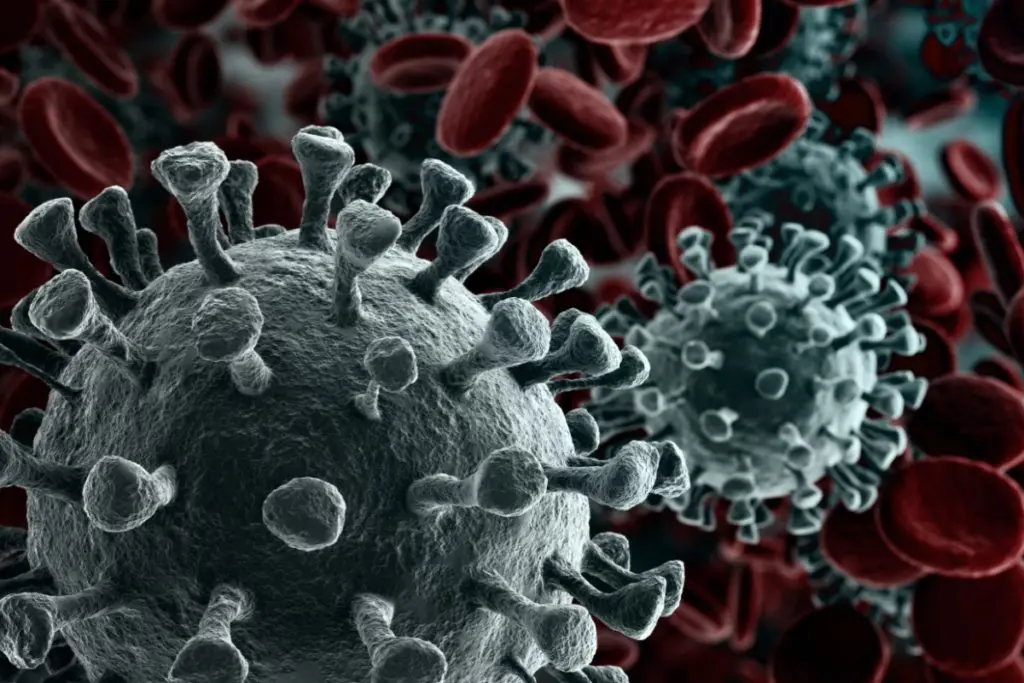
The 2009 Flu Pandemic, or the Swine Flu, began in Mexico from a new strain of the H1N1 influenza A virus. It quickly spread worldwide, making it the first global flu pandemic in over 40 years.
The virus was completely unique at the time, and common symptoms included:
- Cough, sore throat, runny nose, and stuffy nose
- Fever and chills
- Muscle and joint pain
- Fatigue
- Vomiting, nausea, and diarrhea
Severe cases of Swine Flu were treated using antiviral medications that reduced the severity and duration of the symptoms. Eventually, a vaccine was developed at the end of 2009, which helped improve immunity and stunt the spread of the virus.
8. COVID-19 Pandemic (2019 to present)
Estimated Deaths: roughly 6.9 million
We end the list with the most recent and well-known outbreak – COVID-19. This outbreak was caused by a new virus known as SARS-CoV-2, which is thought to have originated from bats. The virus originated in China and rapidly spread worldwide through respiratory droplets and contaminated surfaces.
Symptoms of COVID-19 included:
- Fever, chills, headache, muscle and/or joint pain
- Dry cough, nasal congestion, shortness of breath, and difficulty breathing
- Loss of taste and/or smell
- Sore throat
- Nausea, vomiting, diarrhea
- Severe respiratory distress, pneumonia, acute respiratory distress syndrome (ARDS), and organ failure
Initially, the spread of the outbreak was subdued through quarantines, social distancing measures, and mask initiatives. However, the virus was highly contagious and quickly mutated, leading to increased infection rates.
Towards the beginning of 2021, global vaccination initiatives were put into effect to help control the spread of the virus and its severity. Antiviral treatments were also developed to help further reduce the severity of symptoms in infected individuals.
While the spread of COVID-19 has significantly declined, it is still a major health concern as there are still numerous cases worldwide. Although immunity has increased through vaccinations, many individuals who contracted the virus early on are still struggling with long-term side effects and symptoms.
Final Thoughts
As we all know, history tends to repeat itself. As a result, it is an unfortunate reality that the COVID-19 pandemic won’t be the last global outbreak.
Luckily, medicine is continuing to make leaps and bounds, and it is likely that future vaccines will be more effective.